- News
- AlphaGlass Railing
Frameless Shower Doors vs. Sliding Shower Doors: Which One Is Right for You?
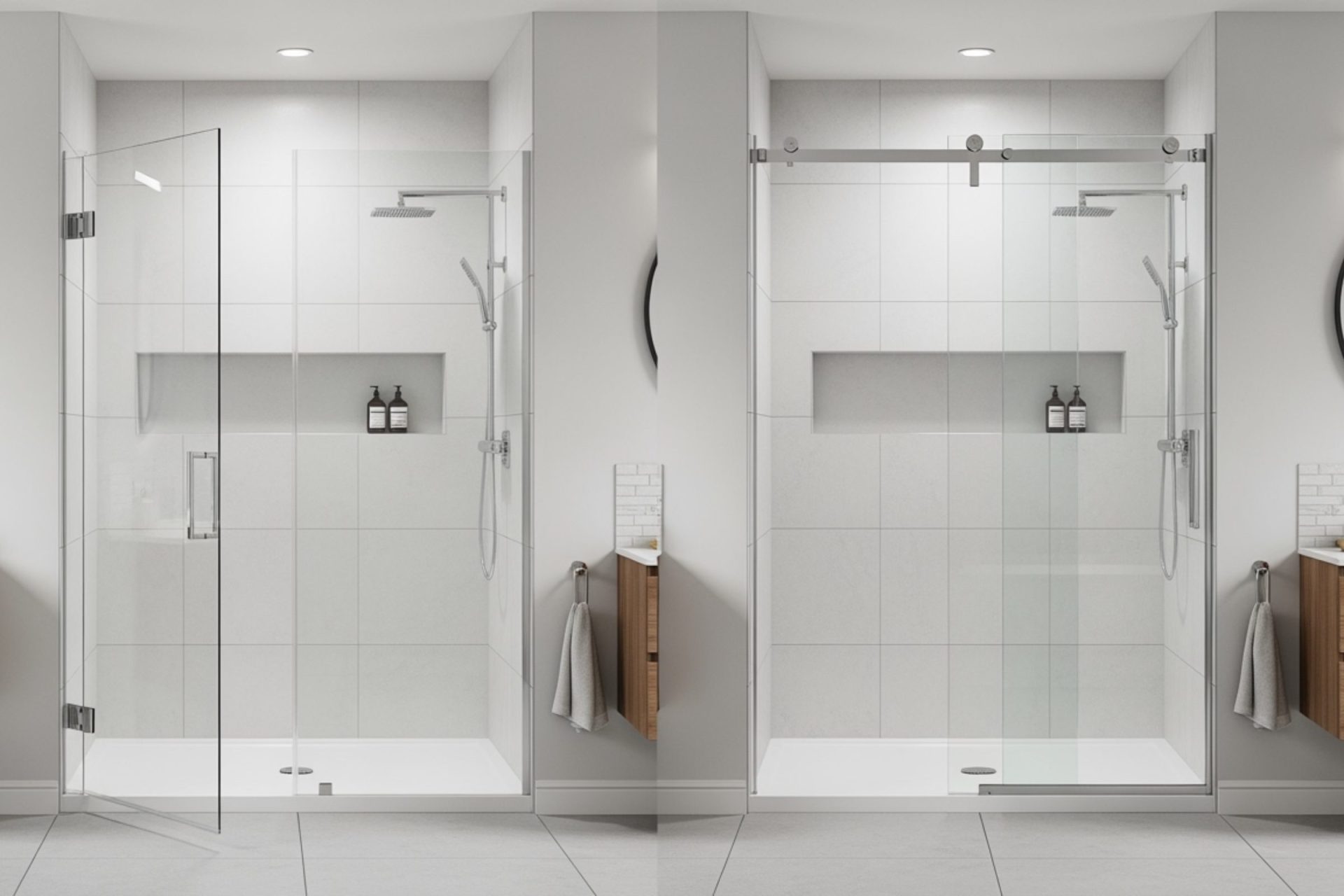
Table of Content
If you are planning a bathroom renovation, picking the shower door sounds simple until you actually have to do it. Then the questions start. Do you go with the clean look of frameless shower doors? Or do sliding glass shower doors make more sense for the way your bathroom works day to day?
A lot of homeowners in Coquitlam and Port Coquitlam get stuck here, and I understand why. These two options solve different problems. One usually wins on appearance. The other often wins on space efficiency. Cost, cleaning, layout, and who will use the shower all matter too.
There is also one important detail people miss at the start: frameless and sliding are not exact opposites. “Frameless” describes how the glass is built and supported. “Sliding” describes how the door opens. Many frameless shower doors are swing or pivot shower doors, but some sliding systems can also have a minimal-frame look. That little distinction changes the conversation.
This guide breaks it down in plain language so you can choose a door that fits your bathroom, your budget, and your habits.
First, what is the actual difference?
A frameless shower door uses thick tempered glass and minimal visible metal. Instead of a bulky perimeter frame, the glass is held by hinges, clips, and carefully placed glass hardware. Most frameless systems are swing shower doors or pivot shower doors that open outward, though some custom glass shower enclosures use fixed panels with a hinged entry door.
A sliding shower door moves along a track. Two or more panels overlap, so the door does not need clearance to swing open. Sliding systems are often framed or semi-frameless, though some newer designs reduce the amount of metal you see.
So the real comparison is usually this:
-
Frameless hinged or pivot doors for a more open, airy look
-
Sliding glass shower doors for tighter bathrooms where swing space is limited
Once you see it that way, the decision gets easier.
Why frameless shower doors appeal to so many homeowners
Frameless doors have become popular for a reason. They make a bathroom feel bigger, cleaner, and less visually busy. In smaller ensuites, that can matter more than people expect. Clear glass with minimal metal lets your tile work show through, and if you have invested in good tile, stone, or a built-in niche, it makes sense to actually see it.
The aesthetic advantage
This is where frameless usually wins. A frameless door has a lighter look. It fits modern bathrooms especially well, but it also works in classic designs because it does not fight the rest of the room.
If you want a shower enclosure to feel custom rather than off-the-shelf, frameless is often the first option people consider. It pairs well with:
-
large-format tile
-
curbless showers
-
matte black, brushed nickel, or chrome hardware
-
bright bathrooms where natural light matters
In many homes across Vancouver, Burnaby, Coquitlam, and Port Coquitlam, bathroom footprints are not huge. Frameless glass helps prevent the shower from looking boxed in.
Easier to clean, usually
Frameless glass shower doors often have fewer places for grime to collect. Less metal means fewer edges, channels, and corners where soap scum can build up. That does not mean they clean themselves. I wish. But they are often simpler to wipe down.
The glass still needs regular maintenance, especially in areas with hard water spotting. A squeegee after each shower goes a long way. If you skip that routine, even beautiful custom glass starts looking tired.
One honest note: frameless doors can show fingerprints, water spots, and streaks more clearly because the design is so minimal. Clean lines look great when clean. They also make neglect obvious.
A premium feel
Frameless shower doors often feel more substantial because they use thicker glass. The door swing, the weight, the hardware, the quiet close, all of it can feel solid when the measurements and glass installation are done well.
That said, the “luxury” label gets thrown around too loosely. What matters more is fit. A well-made frameless door that is measured properly and installed square feels excellent. A poorly planned one feels annoying every single day.
Where frameless doors can be less practical
Frameless is not automatically the right answer. There are tradeoffs, and some of them are pretty important.
They usually cost more
This is often the biggest factor. Frameless systems tend to cost more than framed shower doors or many sliding options because they use thicker tempered glass and more specialized hardware. Precision matters more too. Walls are rarely perfectly straight, and custom measurement matters.
If you are trying to balance multiple bathroom upgrades at once, vanity, tile, lighting, plumbing fixtures, and maybe a double glazed window replacement, a frameless door can eat up more of the budget than expected.
They need swing clearance
This one matters a lot in smaller bathrooms. A pivot shower door or swing shower door needs room to open. If your vanity, toilet, towel bar, or bath mat ends up in the swing path, you can create a daily irritation that no one warned you about.
For a compact hall bathroom or tight ensuite, that clearance problem can be reason enough to rule out a hinged frameless door.
Water control needs careful planning
A good frameless shower enclosure can contain water very well, but it has to be designed properly. Door gaps, panel placement, curb height, slope, and showerhead direction all matter. If the showerhead points straight at the door opening, you may get more splash than you want.
This comes up often with curbless showers and accessible layouts. The clean look is great, but water management has to be part of the design, not an afterthought.
Why sliding shower doors make sense in real life
Sliding doors are sometimes treated like the less exciting option. I think that is unfair. In the right bathroom, they are the smarter choice.
They save space
This is the clearest advantage. A sliding glass shower door does not swing into the room, which makes it a strong fit for smaller bathrooms or busier family layouts. If your toilet or vanity is close to the shower, sliding doors can solve a very real clearance problem.
In condos and townhomes around Metro Vancouver, where bathrooms often have tight layouts, that can be the deciding factor. A door that does not need opening space gives you more flexibility with storage, rugs, and traffic flow.
They work well for tub-shower combos and wide openings
Sliding systems are especially common on bathtub enclosures and wider shower openings. If you have a long alcove shower, two overlapping glass panels can be a practical, tidy solution.
They also make sense when you want one panel to stay fixed while the other moves, creating a contained system with fewer worries about outward water spray.
They can be easier for shared bathrooms
In family bathrooms used by multiple people, sliding doors can be simple and predictable. No one has to think about swing direction or whether the door was left partly open into someone’s path. That sounds minor, but small annoyances add up fast in busy homes.
The downsides of sliding doors
Sliding doors are practical, but they come with their own compromises.
More hardware usually means more cleaning
Tracks, rollers, and bottom channels can collect soap scum, mineral deposits, and grime. Some designs are much better than older ones, but in general, sliding systems have more components to maintain than frameless hinged doors.
If easy cleaning is high on your list, this is worth thinking about. The cleaning itself is not hard. It is just more detailed.
The opening is only partial
With most sliding systems, one panel overlaps another, which means you never get the full shower opening clear at once. For some people, that is no big deal. For others, especially if accessibility is a concern, it can feel more restrictive.
This is one reason curbless, wider-entry showers often lean toward fixed panels and swing or pivot doors instead.
The look is usually more structured
Even good-looking sliding systems tend to show more metal or visible hardware. That is not bad. It is just a different style. If you want the shower to disappear visually and let the tile take center stage, sliding doors do not usually do that as well as frameless glass.
Cost: what homeowners should expect conceptually
Price depends on glass thickness, hardware, finish, opening size, wall conditions, and whether the shower is a standard opening or a custom glass project. Still, there are broad patterns.
Framed shower doors and many standard sliding systems are often the more budget-friendly choice. Frameless shower doors usually cost more because of thicker glass, more exact fabrication, and the tighter tolerances needed during installation.
That does not mean sliding is always cheap or frameless is always wildly expensive. A high-end sliding system with premium glass hardware can cost more than a basic frameless setup. But if you are comparing common residential options, frameless usually starts higher.
I think this is the better way to frame the question: what are you paying for?
With frameless, you are usually paying for appearance, thicker glass, and a more open feel.
With sliding, you are often paying for practical function in a small footprint.
Both can be worth it. The wrong one feels overpriced almost immediately.
Cleaning and maintenance, the part no showroom display tells you
Let’s be honest. Every shower door is easy to love when it is new.
What matters is how you feel about it six months later.
Frameless doors usually win for simpler cleaning because there are fewer places for buildup to hide. A quick squeegee and regular glass-safe cleaning can keep them looking sharp. The main challenge is visible spotting on clear glass.
Sliding glass shower doors usually require more attention around tracks and rollers. If your bathroom sees heavy daily use, those areas can get messy faster. Some modern systems reduce that issue with better track design, but the basic tradeoff still holds.
If low-maintenance is your top priority, ask yourself one question: would you rather wipe a large sheet of glass more often, or scrub more hardware and corners less happily?
I know which one I would choose.
Space and layout, the factor that should probably come first
Most people start with looks. The better place to start is layout.
A beautiful shower door that fights the room is a bad choice.
Choose frameless when:
You have room for the door to swing open comfortably, you want the shower to feel open, and you care a lot about clean visual lines. This is often a great fit for larger ensuites, walk-in showers, and custom shower enclosures where tile and hardware are part of the design story.
Choose sliding when:
You are working with a smaller bathroom, a tub enclosure, or a shower opening where swing clearance is tight. It is also a strong option when multiple people use the bathroom and you want something compact and predictable.
If you are comparing options, it helps to look at actual examples of frameless and sliding glass shower doors so you can see how different configurations change the feel of a bathroom.
What about accessibility and long-term use?
This part deserves more attention than it usually gets.
If someone in the household has mobility concerns now, or might in the future, door style matters. A wider, easier entry can be more comfortable and safer. Some pivot shower doors work well here, especially with barrier-free or low-threshold shower designs. Sliding doors can be practical, but the partial opening may be a limitation depending on the user and the layout.
For steam room glass or more enclosed shower environments, the design requirements change again. Door seals, transoms, ventilation, and heat retention all matter more than they do in a standard shower. In those cases, the “frameless vs sliding” question is only one part of the planning.
A simple way to decide
If you are stuck, use this short filter:
-
Measure your clearance outside the shower.
-
Decide whether easy cleaning or space-saving matters more.
-
Be honest about your budget.
-
Think about who uses the bathroom every day.
-
Consider whether you want the shower to stand out or blend in.
That is usually enough to point you in the right direction.
The best choice for Coquitlam and Port Coquitlam homeowners
There is no universal winner here, and that is actually the useful answer.
Frameless shower doors are a strong pick if you want a lighter, more custom look and have enough room for a swing or pivot opening. They are usually easier to keep visually clean, and they work especially well in upgraded ensuites and walk-in shower enclosures.
Sliding glass shower doors are a smart choice if your bathroom is tighter, your layout is busy, or you want a door that does not compete for floor space. They are practical, common for alcove and tub setups, and often easier on the renovation budget.
If I had to reduce the whole decision to one sentence, it would be this: choose frameless for openness, choose sliding for efficiency.
That may sound overly neat, but in most bathrooms, it is true.
Before you commit, make sure the choice fits the room, not just the mood board. In bathroom renovations across Coquitlam, Port Coquitlam, Vancouver, Burnaby, and Maple Ridge, the best glass installation decisions usually come from careful measuring and realistic expectations. The door should look good, yes. But it also has to work on rushed weekday mornings, after long showers, and in the kind of real-life mess no design photo ever shows.
That is the version of “right for you” that actually lasts.

Explore limitless glass interior designs for bright, high-quality spaces with soundproof office partitions for serene workplaces