- News
- AlphaGlass Railing
Interior vs. Exterior Glass Railings: What’s the Difference?
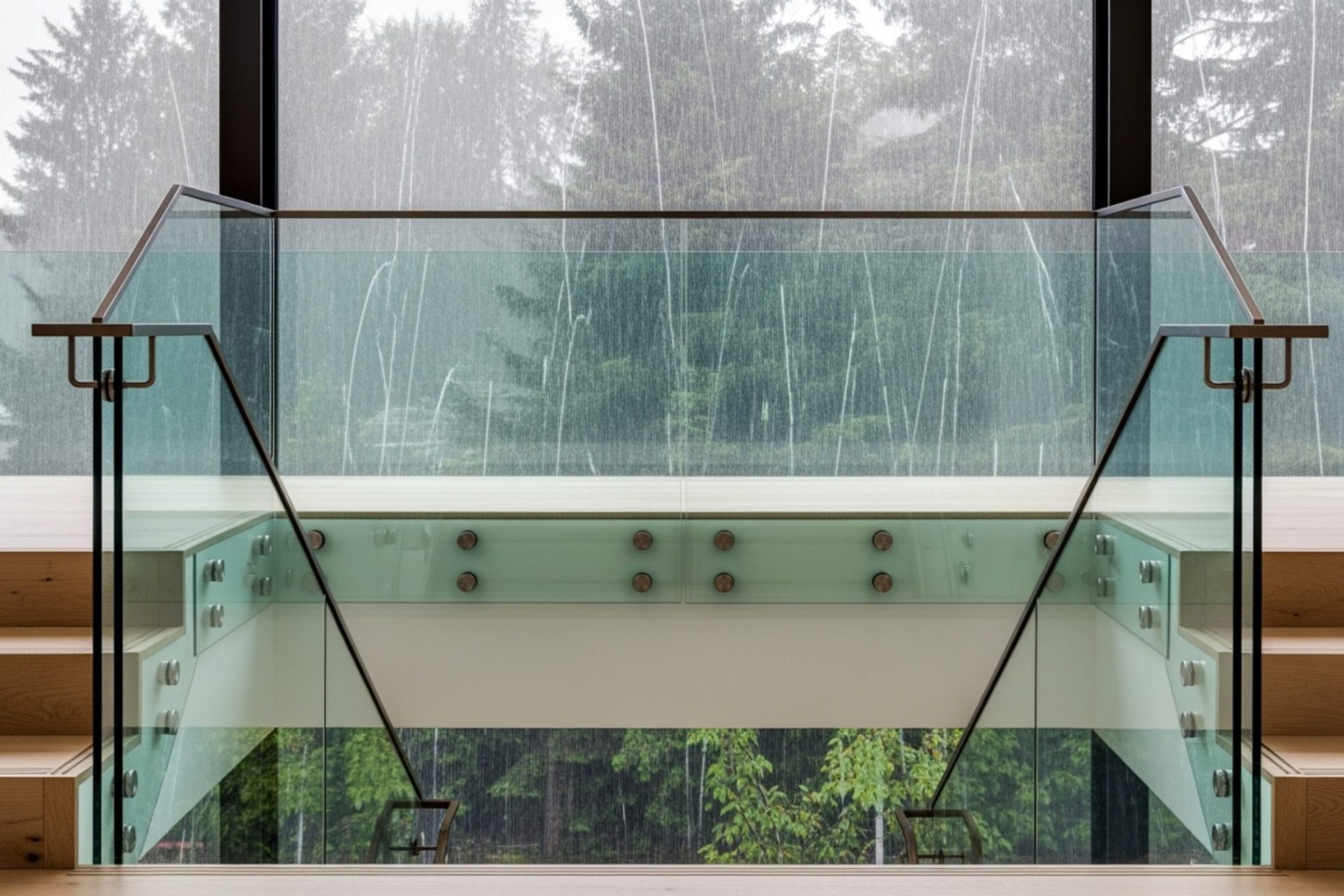
Table of Content
Glass railings look simple when you see the finished result. Clean lines. Open sightlines. Very little visual weight. But the railing itself is doing a serious job. It is a safety barrier first, a design feature second.
That matters because an interior glass railing and an exterior glass railing are not the same thing with a different view behind them. They may look similar at a glance, yet they are built for different conditions, different loads, and often different code requirements.
If you are planning stairs, a loft edge, a balcony, a deck, or a commercial walkway in Vancouver, Burnaby, Coquitlam, Port Coquitlam, Maple Ridge, or elsewhere in Metro Vancouver, this distinction is worth understanding before you order custom glass or book glass installation. It can affect cost, hardware, maintenance, and even whether your project passes inspection.
The short answer
Interior glass railings are designed mainly for controlled indoor conditions. They still need to meet safety standards, but they do not deal with rain, UV exposure, temperature swings, or the same corrosion risk as outdoor systems.
Exterior glass railings have to handle weather, moisture, dirt, stronger environmental loads, and harsher wear on metal parts. That usually means tougher glass specs, more durable glass hardware, and more attention to drainage and sealing.
That is the core difference. The rest is detail, and the detail is where projects either feel solid and long-lasting or become a headache.
Why people confuse the two
Part of the confusion comes from aesthetics. A frameless interior stair guard can look very similar to a frameless balcony guard. Both may use clear tempered panels. Both may use a base shoe or side-mounted brackets. Both may look minimal.
But railings are not like decorative glass features such as mirrors, shower enclosures, or office glass partitions. Those products can be highly engineered too, but a railing is a protective barrier that has to resist force. People lean on it. Kids push against it. On a deck, wind pushes against it too.
So while an indoor glass railing and an outdoor glass railing can share a design language, they do not live the same life.
Interior glass railings: what matters most indoors
Inside a home or commercial space, the biggest appeal of glass railings is visual openness. They let light travel. They make narrow staircases feel less cramped. They help open-concept spaces stay open.
That is why designers use them around stairwells, mezzanines, lofts, and second-floor hallways. In a commercial setting, they also work well where you want separation without the heavy look of a solid wall.
If you want to see how an indoor glass railing can be detailed in Coquitlam homes and similar spaces, the examples tend to show this clearly. The railing almost disappears, which is exactly the point.
Indoors, the design priorities usually include:
-
sightlines
-
finish quality
-
how the hardware connects to flooring or stair stringers
-
ease of cleaning
-
how the railing works with wood, tile, or metal finishes
Because indoor systems are protected from weather, hardware choices can be a bit broader. You may still want stainless steel or powder-coated components for durability, but the metal is not being hit with the same mix of moisture, dirt, and temperature change that an outdoor system sees.
Interior railings also tend to have fewer drainage concerns. Water is not pooling in channels. Freeze-thaw cycles are not stressing seals. Dirt and pollen are less of a problem. That simplifies some parts of the build.
Still, “simpler” does not mean casual. Stair geometry, anchoring, handrail requirements, and guard height still matter. This is not a place to improvise.
Exterior glass railings: built for weather first
Outside, the priorities shift fast.
An exterior railing still needs to look good, of course. But weather usually becomes the real boss. Rain, standing water, salt in the air, UV exposure, winter cold snaps, summer heat, and wind pressure all affect the system.
That is especially true in the Lower Mainland. In Vancouver, North Vancouver, White Rock, Richmond, and other parts of the coast, moisture is constant. Even a covered deck is still an exterior environment. It may be sheltered from direct rain, but it is not sheltered from humidity, condensation, grime, and temperature swings.
This is why outdoor systems often need:
-
more robust anchoring
-
thicker or differently specified glass
-
corrosion-resistant fasteners and fittings
-
details that let water drain instead of sit
-
sealants and finishes chosen for exterior use
If you want a visual sense of what changes outside, these outdoor glass railing examples near Coquitlam show the kind of assemblies often used on decks, balconies, and commercial exteriors.
I think this is where many buyers get tripped up. They see a sleek frameless detail online and assume it can go anywhere. Sometimes it can. Sometimes it absolutely should not.
The biggest differences, broken down
1. Exposure to weather
This is the obvious one, but it drives almost everything else.
Interior glass railings live in a stable environment. The temperature is relatively controlled. Water exposure is minimal. The metal parts stay dry most of the time.
Exterior glass railings deal with rain, frost, heat, debris, and sometimes coastal air. That means every exposed component needs to be chosen with long-term wear in mind. A finish that looks fine indoors can age badly outside.
In practical terms, this often affects the type of clamps, base channels, anchor bolts, and gaskets used. Exterior-rated parts are usually less forgiving on price, but there is a reason for that.
2. Glass specification
People often ask whether interior and exterior railings use the same glass. Sometimes yes, sometimes no.
Many interior glass railings use tempered glass, laminated tempered glass, or another code-compliant assembly approved for that exact railing system. Exterior systems may use thicker glass or laminated builds more often because the panels can face stronger loads and harsher conditions.
The right answer depends on the application. A stair guard inside a house is different from a balcony edge several storeys up. A ground-level patio is different from a windy rooftop. A commercial project is different from a private residence.
The safest mindset is simple: never assume the glass type for one railing can be copied onto another location just because the look is similar.
3. Hardware and corrosion resistance
Glass hardware is easy to ignore when you are looking at finished photos. It is also one of the first things to fail if the wrong material is used.
Interior systems may use stainless steel, aluminum, or coated components that work well in a dry environment. Exterior systems often need higher corrosion resistance, especially near the coast or in places that stay damp for long stretches.
That includes:
-
spigots
-
clamps
-
standoff mounts
-
top rails
-
fasteners hidden inside the mounting system
Cheap hardware can look fine on day one and rough a year later. Rust staining, pitting, loose fittings, and finish breakdown are not rare when the wrong components are installed outdoors.
4. Structural loads
This difference is less visible, but it is a big deal.
An interior railing mainly resists the force of people using the space. An exterior railing may also need to account for stronger wind loads and different edge conditions. Balconies, decks, and elevated walkways can demand more engineering than a typical interior stair guard.
That affects the size of the glass, the spacing of supports, the anchoring method, and whether a top rail is required as part of the system. In some designs, a top cap is not just a visual choice. It contributes to performance.
This is why “frameless” is not one fixed product. It is a family of systems, and some are better suited to indoor use than outdoor exposure.
5. Water management
Indoor railings mostly avoid this issue. Outdoor railings cannot.
Base-mounted exterior systems need a plan for drainage. Water that collects in channels or around anchors can cause staining, freeze damage, or premature wear. This gets overlooked more than it should.
Good exterior detailing considers where water lands, where it flows, and where it exits. That sounds boring, but boring details keep a railing looking good.
A beautiful outdoor glass railing with poor drainage is a frustrating project waiting to happen.
6. Cleaning and maintenance
People choose glass because they want openness, and sometimes because they think it will be low maintenance. Indoors, that can be mostly true. A quick wipe deals with fingerprints, dust, and the occasional smudge.
Outside is a different story. Rain spots, pollen, bird droppings, tree sap, traffic film, and hard water marks all show up faster. If the railing is near a pool, ocean air, or a busy road, you may clean it more often than expected.
This does not mean outdoor glass railings are high-maintenance. It means they are honest-maintenance. They need regular cleaning if you want them to stay clear.
Style differences are real, but smaller than people think
Many people start with style, asking whether indoor railings are more modern or whether outdoor systems have to look heavier. The answer is not really.
You can build a very minimal outdoor system. You can build a more framed and structured interior system. The style options overlap a lot.
What changes is the amount of invisible work behind the look.
A sleek interior glass railing may be all about keeping the stair hall bright. A sleek exterior railing may need stronger anchors, more durable metal, and careful drainage hidden under the same clean appearance.
So yes, style matters. But performance usually decides the system.
What local climate does to the conversation
If you live in Metro Vancouver, location shapes the decision more than many homeowners expect.
A project in downtown Vancouver might deal with moisture, traffic film, and coastal air. A project in Burnaby or Coquitlam may see heavy rain and lots of seasonal grime. A deck in Maple Ridge might get more debris from trees. A hillside home in West Vancouver may face stronger wind exposure. A condo balcony in New Westminster or Surrey may have different structural limits than a detached home.
That is why “outdoor glass railing” is not one-size-fits-all, even within the same region.
The local climate does not mean you should avoid glass railings outdoors. Far from it. It means the materials and details need to suit the site.
Common mistakes people make
The first mistake is choosing by photo alone. A nice image does not tell you what glass is inside the system, how it is anchored, or whether the hardware is rated for exterior use.
The second is assuming covered means indoor-like. It does not. A covered balcony still gets damp air, temperature change, and wind-driven moisture.
The third is underestimating maintenance. Clear glass outside looks excellent, but it will show dirt. If that reality bothers you, patterned, tinted, or easier-to-clean options may be worth discussing.
The fourth is thinking any glass installer handles railings the same way. Railings are specialized work. Measurement, substrate condition, code compliance, and hardware selection matter a lot.
How to choose the right type for your project
If you are deciding between an indoor glass railing and an outdoor glass railing, ask these questions early:
-
Is the railing fully inside, fully outside, or in a semi-exposed area?
-
What loads will it need to resist, including wind or heavy foot traffic?
-
What material is it mounting to, such as concrete, wood, or steel?
-
How much cleaning are you realistically willing to do?
-
Do local code rules require a specific glass build, top rail, or guard height?
Those questions cut through a lot of guesswork.
If you are a homeowner, they help you avoid buying the wrong system. If you are a contractor or designer, they help prevent delays later when engineering, fabrication, or inspection enters the picture.
So which one costs more?
In many cases, exterior glass railings cost more than interior ones. Weather-rated hardware, stronger assemblies, corrosion resistance, and more demanding installation conditions all push the price upward.
But cost is not purely “inside versus outside.” A simple indoor guard can cost less than a complex exterior balcony system, yes. Still, a large custom interior stair with premium finishes and difficult mounting can also be expensive.
The smarter question is not “Which one is cheaper?” It is “What does this location require?”
That usually leads to a better result.
Final takeaway
Interior and exterior glass railings may share the same clean, modern look, but they are built for different jobs.
Interior systems focus on openness, finish, and integrating cleanly with the rest of the space. Exterior systems have to do that while also handling weather, moisture, corrosion, drainage, and stronger environmental demands.
If you remember one thing, make it this: a railing is a safety system made of glass, not just glass shaped like a railing.
That mindset leads to better decisions, whether you are planning an indoor glass railing for a stairwell in Port Coquitlam or an outdoor glass railing for a deck in Vancouver. The right design is the one that still looks and performs well long after installation day.

Explore limitless glass interior designs for bright, high-quality spaces with soundproof office partitions for serene workplaces